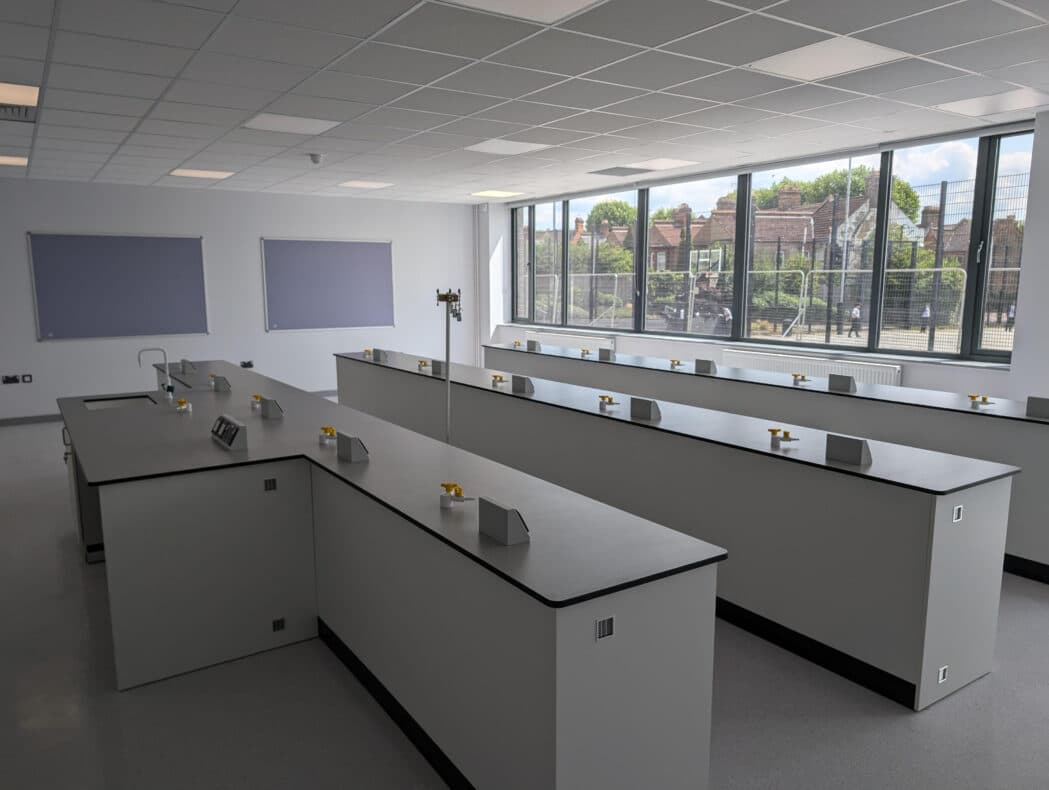
Air quality case study
Willowfield School, Indoor Air Quality
Overview
As part of the BREEAM Hea 02 requirements, post-construction indoor air quality (IAQ) measurements were undertaken at Willowfield School in London to verify that pollutant concentrations within the completed building were within acceptable limits and to confirm that the indoor environment supports the health and wellbeing of future occupants.
Methodology
A total of 13 sampling locations were identified throughout the school to provide a representative coverage of teaching spaces, common areas, and specialist rooms. The selected locations reflected a range of ventilation types and building uses, in accordance with the BREEAM guidance.
The sampling strategy was designed to ensure that results provided an accurate and representative understanding of overall indoor air quality within the building.
Pollutants measured:
- Total Volatile Organic Compounds (TVOCs)
- Formaldehyde
Sampling equipment:
- Tenax TA sorbent tubes were used for the collection of TVOCs.
- UMEx 100 passive diffusion badges were used for the collection of formaldehyde.
All sampling was conducted under normal occupied conditions, but with rooms unoccupied during testing to avoid interference from human activity. The building’s ventilation systems were operated for 3 hours prior to testing to conditions as intended once operational.
To improve accuracy and reliability, triplicate samples (three sets of Tenax tubes and UMEx badges) were deployed at three separate locations, allowing for statistical verification of results. Travel blanks accompanied the samples throughout handling and transport to account for any potential background contamination. All samples were analysed by a UKAS-accredited laboratory following the relevant analytical methods.
Results and Compliance
The measured concentrations of TVOCs and formaldehyde were compared against the benchmark limits defined in BREEAM Hea 02 and associated guidance documents.